‘Today a young man on acid realized that all matter is merely energy condensed to a slow vibration, that we are all one consciousness experiencing itself subjectively, there is no such thing as death, life is only a dream, and we are the imagination of ourselves. Here’s Tom with the Weather.’
― Bill Hicks
● Modern science is aligning with Eastern philosophies that view consciousness as an unbounded, timeless, and deathless entity. Near-death experiences are better understood through a biocentric worldview, where space and time are mental constructs, and all minds are interconnected and entangled with physical reality.
● The universe offers limitless experiences across multiple possible worlds, suggesting eternal life through continuous consciousness. Death is not an end, but a transition to another experience or realm.
● The idea of eternal consciousness can be frightening, as it implies never-ending experiences. However, this perspective encourages self-improvement and learning, leading to a higher quality of consciousness and ultimately a more harmonious existence.
In recent decades, science is catching up to Eastern philosophies that intuited long ago that we are a part of a timeless – and therefore deathless – entity. A singular consciousness that creates all that is.
Near death experiences have been reported for millenia. They were always mysterious, but now that we have this renewed ‘biocentric’ worldview, we can truly understand them. We are not living in space and time, space and time are constructs of our minds. Also, our minds are not truly separated but connected. In other words, we are part of a gigantic, mental and eternal octopus and we can never be unhooked from this entity. Therefore, death is not the end. In this new worldview, it cannot be.

Picture: Pixabay (Henriksen19)
Death Is Just A Transition To Another State Of Consciousness
In waking life, we are living on a frequency in which our mental algorithms create consensus spacetime reality. When we fall asleep, these frequencies change and we are now creating private realities that we can not maintain. Dreams are constantly changing and morphing, and they fall apart just as easily as they arise.
When we wake up, our consciousness – and corresponding brain state – settles in such a way that we are now creating a solid reality with the laws of nature steadily in place. When you are dreaming, sometimes your consciousness has to come from really, really far and it takes a while to be fully awake again. But it does come back (your consciousness) because it is tied to the reality-track you are currently ‘living a life’ on.
When death occurs, a comparable thing happens: your consciousness moves to yet another frequency. Only unlike dreams, this shift is a permanent one. Your consciousness is now no longer tied to your spacetime body, and when rigor mortis is final, it can no longer return to the body. However, it doesn’t just vanish either. It cannot vanish because it is not part of Domain 2, it is part of Domain 1. And Domain 1 is eternal. As a reminder, these are the differences between the two domains:
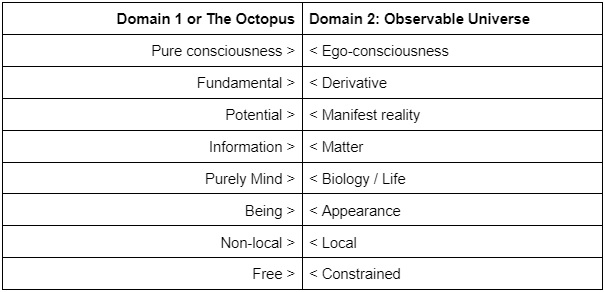
Picture: Free-Consciousness
What happens when you die is that your unit of consciousness – the ‘me’-feeling that you have – is uncoupled from your spacetime body. For observers in your surroundings, you stop being you and only an empty shell, your avatar-body, remains.

Picture: Free-Consciousness
The part that made you ‘you’ is gone for them, but not for you. So where does it go? It will either go to another reality track (another Domain 2, so your consciousness will reincarnate) or it will remain in the mental space in between worlds (Domain 1).
Living Forever, Comfortably In The Multiverse
‘The plays of experience, even seemingly sad, are never random, nor ultimately scary. Rather, they may be conceived as adventures. Or perhaps as interludes in a melody so vast and eternal that human ears cannot appreciate the tonal range of the symphony.’
― Robert Lanza
Scientist Robert Lanza wants to stick as close to science as possible in the ‘Biocentrism’ books. He knows true death cannot occur, because consciousness cannot ‘go’ anywhere, but he doesn’t engage in speculations about the hidden Domain 1 either (although his theory does include this domain, a ‘field of mind’ he calls it).
His conclusion about death simply is: ‘you will always be alive.’ What he means is that the universe is the sum total of all the experiences you can possibly have in a spacetime realm. The amount of possibilities is staggering. Lanza proposes that ‘after’ death (which is not really after because time is created by your mind), your consciousness will continue in one of the countless other possible worlds or realities. The universe is like a huge DVD collection, and the DVD-player’s laser (our ego-consciousness) is always playing one of the trillions of trillions of discs. In other words, we will always be alive and never be ‘gone’ because that would be impossible.
This view treats reality like a video game: when you die, you are immediately respawned. Only, you don’t just have three lives, but an unlimited number. You will never run out of lives.
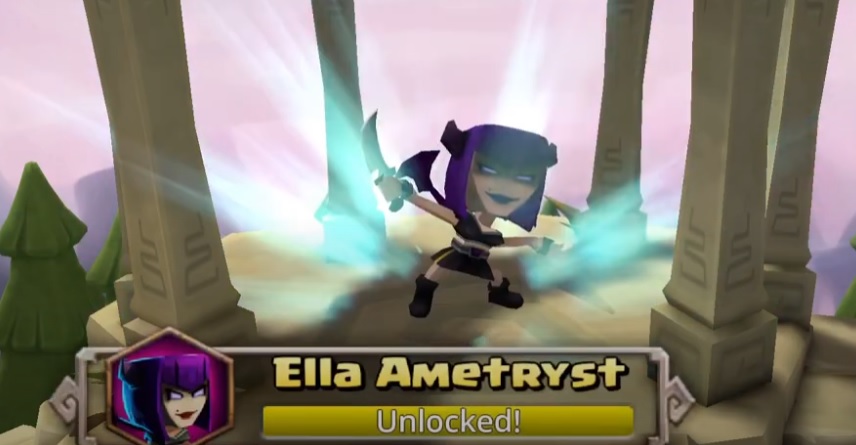
Picture: YouTube (IGN)
This is a fine way to look at it, but for those who are more comfortable to travel outside of the arena of science into more philosophical or spiritual grounds, near-death experiences will be of interest. As we can gather from many reported near-death experiences, Domain 1 is where one’s consciousness ‘returns to’ after physical death of the body.
Accounts Of Near Death Experiences
Death is a promise of a trip back to our source: Domain 1. And according to ‘The Tibetan Book of the Dead’, it will likely be a blissful voyage. ‘From within a state free of grasping and beyond intellect, I take refuge in the nature of the great expanse of sameness and perfection, a temporal emptiness, free from conceptual elaboration, primordially pure in essence, natural expression and compassionate energy.’[1]
Can we get a taste of that in our regular life? The French describe an organism as ‘La petite mort’ (the small death), but this is only a very brief trip to the beyond if you even go there at all. Psychedelic drugs are a better way to do it, but the effects are quite unpredictable and not everybody enjoys going through all the negative effects which are part of a trip.
The closest you can get to Domain 1 is having a near-death experience. Materialists will always be skeptical about these types of experiences, but with biocentrism we have a perfectly good explanation for them.
After-life researcher Raymond Moody collected a lot of these types of experiences and coined the term NDE (Near Death Experience). The basic traits of NDA’s are:
● Peace and painlessness
● Out of body experience
● The tunnel experience
● Encounters with deceased relatives
● A past-life review
● A reluctance to return
● An encounter with a being of light
● The feeling that there is an important purpose to life

Picture: Free-Consciousness
Notably, many of these experiences are reported to occur in the absence of measurable brain activity. In ‘The Immortal Mind’, the authors describe several cases in which individuals who had near-death experiences reported observing events they could not plausibly have known about while in a comatose or near-death state. In addition, there are accounts of the deceased communicating with the living, as well as reports of individuals – most often children – who claim detailed memories of past lives, including specific information about deceased persons that they seemingly had no prior access to.
All these phenomena can be explained by the biocentric model of the universe. The fundament of the cosmos is information stored in consciousness. Your brain can access certain experiences like a logged-in user of Google or I-Cloud can access certain files.This information is potentially accessible for other users. When an organism dies, just like when a computer breaks down, it is no longer processing information and creating experiences for this particular avatar. But the information is still stored on the cosmic cloud and can be experienced once again.

Picture: Iconscout (Pixsellz Io)
Afraid Of Eternity
‘How does one escape a cage that doesn’t exist?’
― Meave in ‘Westworld’ (Season 3, Episode 2)
In the biocentric view, the body and the mind are both forms of energy, but they operate in different domains. The mind is powered by Domain 1, a non-local dimension of pure consciousness, while the body exists in Domain 2, the physical domain of spacetime. At death, the mind disengages from the Domain 2 body and returns to Domain 1, which is the fundamental dimension of consciousness. The body, by contrast, remains behind as physical matter, governed by the laws of spacetime and energy (E = mc²).
You are part and parcel of this consciousness-system, and you can never be uncoupled. For many people, this is an even scarier prospect than being forever dead. In the mental universe, you always exist – and will always be experiencing something. Unless of course The Octopus itself dies which is highly unlikely. It consists of energy and energy can change form, but it cannot be destroyed.
The downside of the realization that death does not exist, which should be pretty good news all things considered, is that the idea of an eternal, consciousness-based universe can be frightening. What if you are tired of experiencing? Tired of feeling pain? Then you can never get out. It is a prison for your mind or rather: your mind is the prison.
When this biocentric perspective of the universe becomes the default worldview, a general fear of death might be replaced by a fear for eternity. What can be said to sooth this fear, is that a stay in Domain 1 is described by people who have experienced NDE’s as very peaceful. Also, consciousness seems to operate in waves. Fears, even extremely terrible ones, will come and go and will always be eventually replaced by waves of bliss.
Evolution And Purpose
Though you may be stuck in consciousness-land forever, the relatively good news is that there appears to be a purpose to work on. So get yourself (an individualized unit of consciousness) together and start learning and improving on a faster trajectory than before. Because that’s the benefit of having this knowledge. You now know that it is nothing but a game and how you can play it well.
Thomas Campbell describes it beautifully in his book ‘My Big TOE’. Thanks to some of our finest scientists, we know that evolution is a fact of nature. And the existence of evolution as a primary process points to mental evolution as the purpose of our eXistenZ. The mental code that animates our world seems to be designed in such a way that self improvement is possible. Through our free will choices we learn, then mess up again, and sometimes manage to improve the quality of our consciousness. This is then the ultimate purpose of life. Learning, continually improving ourselves, keeping our egos in check, fighting our personal demons and becoming more accomplished beings.
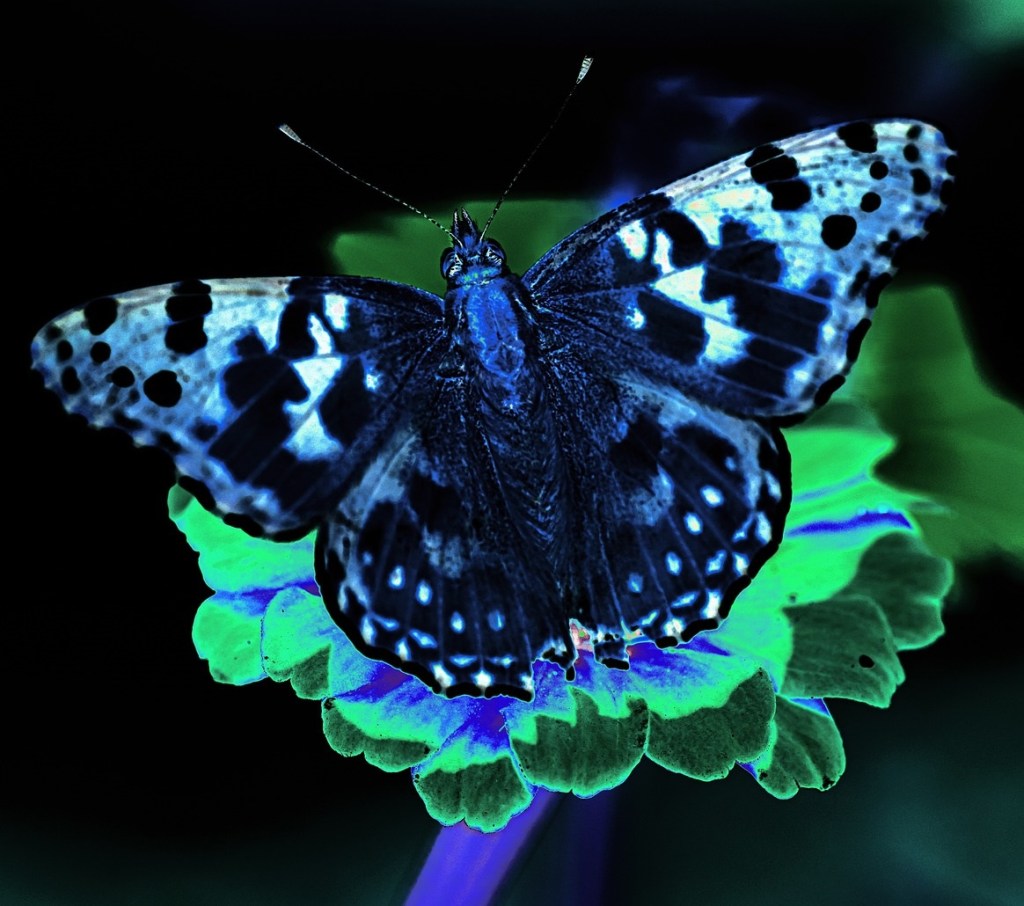
Picture: Pixabay (hulkiokantabak)
The end goal is a planet where the overall quality of consciousness is so elevated that life itself becomes, in effect, heaven on earth. It represents the highest goals that we – as carbon based creatures, but ultimately spiritual beings – can attain.
But what about our individual selves? We will grow old and die, so what’s the point? Take a step back; you seem to forget that you are not your body. Yes, your body will deteriorate. But then you can get a new one. First you have to check in back home (Domain 1). You see, Yoda has explained it already in ‘The Empire Strikes Back’ when he taught us that “luminous beings are we, not this crude matter. You must feel the Force flow around you. Here, between you, me, the tree, the rock, yes, even between the land and the ship.”
There is really only one consciousness, so death does not exist at all. We are not mortal machines, but immortal mental creatures. We cannot disappear from the consciousness-system. And you have no choice but to be born into it again and again. Like ‘Groundhog Day’, only with a different avatar and environment every time.
Are you ready for that? It doesn’t matter if you are, because you’ll keep going on and on and on and on anyway. Enjoy the rides!

Picture: Pexels (Bebet Tirta)
1. Jinpa, T., Coleman, G., Dorje, G. The Tibetan Book of the Dead: First Complete Translation, London: Penguin, 2006


 Free-Consciousness
Leave a reply to An Atheist Goes To Heaven | FRAGMENTEN UIT HET SCHEMERLAND Cancel reply