

‘Useful as it is under ordinary circumstances to say that the world exists ‘out there’ independent of us, that view can no longer be upheld.’
― John Wheeler
● A key focus of quantum physics is the measurement problem exemplified by the double slit experiment. This experiment shows that particles behave differently when observed, suggesting that the act of measurement (and potentially consciousness) influences physical reality, transforming statistical probabilities into definite outcomes.
● The dominant Western materialist view, which sees consciousness as a byproduct of the brain, is insufficient to explain quantum phenomena. Therefore, some very prominent scientists support a perspective where consciousness is primary and universal, resonating with Eastern philosophies and idealism. This worldview posits that reality is a construct of a universal consciousness, making conscious beings active participants in creating the material universe.
● Cultural biases, particularly in Western thought, hinder the acceptance of consciousness as fundamental to quantum mechanics. Experimental evidence however calls for a shift in worldview, moving away from materialism towards an understanding that integrates consciousness as a central element of reality.
Quantum mechanics began as a theory of matter on the atomic and subatomic scales, but most physicists now believe it applies to everything, including space and time, on all scales. Wherever the persistent question pops up whether quantum mechanics and consciousness are connected, you can expect fierce opposition. On one side, you will find the hardcore physicalists who aggressively reject the notion that the two areas could possibly be related in any way. On the other hand, there is the new age or ‘The Secret’ crowd who will claim that quantum mechanics is proof that we can manifest the reality we want. It will be hard to find middle ground.
Yet, what is interesting is that many renowned physicists who laid the foundations of quantum mechanics – and whose opinions should therefore carry significant weight – asserted unequivocally that the two areas are most definitely intertwined. The following selection of quotes illustrates this:
‘I regard consciousness as fundamental. I regard matter as derivative from consciousness. We cannot get behind consciousness. Everything that we talk about, everything that we regard as existing, postulates consciousness.’

― Max Planck, German Nobel Prize-winning physicist and the father of quantum theory.
‘It was not possible to formulate the laws (of quantum theory) in a fully consistent way without reference to consciousness.’

― Eugene Wigner, Hungarian-American Nobel Prize-winning physicist.
‘Observations not only disturb what has to be measured, they produce it!’
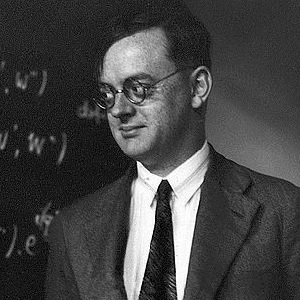
― Pascual Jordan, German theoretical and mathematical physicist who made significant contributions to quantum mechanics and quantum field theory.
How Consciousness Entered The Equation In Quantum Theory
The reason the topic of consciousness came up in the first place during the formulation of quantum theory is the measurement problem: the central puzzle in quantum mechanics. In simple terms it means that an atom, when it is not measured, is in a state of superposition. This means that it is spread out all over the place. It is simultaneously everywhere and nowhere. Once a scientist makes a measurement, the particle appears only in one location and thus loses its ability to be spread out.
Of course a particle, which cannot split itself up, is not really everywhere and nowhere simultaneously. Rather, before the measurement we only have a statistical prediction of where the particle will pop up when we make a measurement. Before that, the ‘particle’ is not yet a material entity but merely statistical information. Like the chance that you will win a lottery. So, the measurement problem can be boiled down to two subproblems:
1) What constitutes a measurement?
2) How does that measurement transform the spread out state into a single state? How does it turn statistical information into a material bit?
These questions are at the basis of the most famous debate ever in physics: what does quantum physics tell us about reality?

Picture: Free-Consciousness
At first, it was thought that the measurement equipment might be the problem. After all, with electrons, you are dealing with extremely tiny particles, so it is very easy to disrupt them. A typical experiment in which the measurement problem arises is the double-slit experiment. In it, atoms are fired – one by one – towards a screen with two slits in it. The particles pass through one of the slits and leave a mark on a reflective screen behind it. But the result is unexpected. Rather than two more or less equal stripes of hits, the atoms form a wave-like pattern, which is an impossible result for single material particles fired one by one.
Therefore, the clever physicists decided to install a measuring apparatus to detect whether the particle passes through the left or the right slit. However, whenever they do this, the pattern reverts to the double stripes. The act of measurement changes the outcome of the experiment. Could the equipment be causing this? It’s a reasonable question, but the answer is no. This has been extensively investigated, and regardless of the equipment used, the effect remains the same: when unmeasured, you observe wave-like patterns; when measured, you see particles appearing at the two expected locations behind the slits.

Double-slit experiment: Subatomic particles, like electrons, when fired one by one, create an interference pattern when not measured (upper image). However, when a detector measures which slit they pass through, the interference pattern disappears, and two bands of hits appear (lower image). In other words, the act of measurement determines the result you get.
Picture: The Royal Institution
Video: The Royal Institution
And this is where the scientists quoted above and others got the crazy idea that human consciousness plays a role in the process that is called the collapse of the wave function. They think so because the only thing that makes a difference in these experiments is information. Whether or not the experimenter knows which route the particle is traveling determines the outcome every time. This has been tested countless times and in many, many ways. Take the quantum eraser experiment, in which information in the mind of the scientist is erased and the outcome of the experiment is completely altered.
So Does Measurement Require A Conscious Observer Or Not?
The physicalist perspective often argues that the physicists quoted above lived long ago, and since their time, many developments in quantum mechanics would have likely changed their views if they were alive today. One such claim is that decoherence – the study of interactions between quantum states and ‘classical’ states – eliminates the need for a conscious observer in quantum mechanics. However, this is not the case. Decoherence does not solve the measurement problem; it merely obscures it, sweeping the issue under the rug. Material interactions alone do not create reality. Only conscious minds directly interacting with the universe can bring reality into existence.
A minority of prominent scientists continue to argue that a conscious observer is necessary to collapse the wave function, though this view is far from mainstream in contemporary scientific circles. This cultural bias might explain why some of the most vocal proponents of this idea are not physicists, but brilliant researchers from other fields. Physicists who share this belief, even privately, often hesitate to express it openly for fear of ridicule within their professional communities. Nonetheless, the connection between consciousness and quantum mechanics seems evident, if only because it provides the only plausible explanation for these otherwise inexplicable phenomena.

Robert Lanza: ‘Again and again, observations have consistently confirmed the observer-dependent effects of quantum theory.’[1]
Picture: The Common Good
But the road to the realization of this new worldview is blocked by a very prominent belief in especially Western culture; the paradigm that consciousness is purely the result of the functioning of the human brain. And if that is really true, if everything we experience is simply billions of neurons firing electric signals, then it is fundamentally impossible that consciousness has anything to do with matter changing states even at the atomic level. Because that would mean that our mentality would be blocked from the physical world. We would all have separate minds and be observing physical events that would take place outside of ourselves. This is the general belief that still dominates our culture today and the main reason that the relationship between consciousness and quantum physics is still even questioned and not taken as self-evident.
The three scientists mentioned above, along with others of their generation, had a markedly different perspective on consciousness. They resonated more deeply with Eastern philosophical traditions, where paradoxes were embraced rather than seen as obstacles, and with idealism – the philosophical view that mind precedes and underpins matter. When these scientists spoke of consciousness, they were not referring to the awareness of an individual observer or a single experiment. Instead, they conceptualized consciousness as a fundamental force – or even the very ground of existence – shared by all living beings on Earth and likely extending far beyond.
One Mind Or Universal Consciousness Creates Reality
Austrian physicist Erwin Schrödinger (of Schrödinger’s Cat fame) is known for the phrase: “The total number of minds in the universe is one.” Schrödinger also stated that: “Consciousness cannot be accounted for in physical terms. For consciousness is absolutely fundamental. It cannot be accounted for in terms of anything else.”
Another physicist who thought along these lines is James Jeans. He said: “I incline to the idealistic theory that consciousness is fundamental, and that the material universe is derivative from consciousness, not consciousness from the material universe… In general the universe seems to me to be nearer to a great thought than to a great machine. It may well be, it seems to me, that each individual consciousness ought to be compared to a brain-cell in a universal mind.” In Jeans his view, consciousness is the ground of being from which all else arises. Reality is not out there, but generated by our entangled minds.

Picture: Freepik
When we look through that lens at the double slit experiment described above, it makes sense. Since reality is created by the mind, before a scientist makes an observation, there is only the potential for existence but nothing tangible. There is not really a particle out there. This is only how we describe the observation of the scientist. The measured particle only exists in his or her mind. He or she is observing his or her observation and not some external reality. There is none.
This should really be the default mode since all we can ever know for certain is in our minds. Postulating that there is an external world out there – which we are somehow reconstructing in our heads – is an unnecessary step for which there is no good reason. Luckily, more and more evidence is being discovered that materialism cannot be correct, and that the conscious observer is hopelessly intertwined with the reality he or she is observing.
Conclusion, Does Consciousness Really Have Anything To Do With Quantum Physics?
I must conclude that the answer is a resounding yes. The aversion to this interpretation – I believe – is caused mostly by these two things:
➜ Cultural bias: In the west we are programmed to only think of concepts that are linear and material in nature.
➜ A misunderstanding of what consciousness means in this interpretation. It is not ‘individual’ consciousness generated by the brain. That does not exist in this view. There is only one consciousness shared by all. In Eastern tradition, this view is part of Buddhism, Hinduism, Taoism and non-dualism. In the West it is the philosophical viewpoint of idealism.
What it all boils down to is this: without a conscious observer, matter only dwells in an undetermined state. There is a deep connection between consciousness and the physical world. The two are intertwined and cannot be separated. So on the most fundamental level everything is one. We are living in a fundamentally conscious universe.

Collapsing the wave function: without a conscious observer, matter only dwells in a hazy, undetermined state. At the moment of observation, this superposition of all states collapses into a single physical reality with definite properties. This doesn’t just apply to (sub)atomic particles, but to all material objects.
Picture: Free-Consciousness
And with that, we return to the discovery that Earth is not at the center of the universe, but one of trillions of planets circling trillions of stars. We thought we were completely insignificant – like fungus on a rock – but it turns out we have a purpose after all. Conscious beings are there to manifest the material universe. In the big scheme of things, we are still unfathomably tiny, but we are not pointless. And that is a happy take-away from this major shift in worldview that quantum mechanics has brought us. We are not passive, but active participants in this reality. Consciousness does not have something, but everything to do with quantum mechanics since everything is a construct of consciousness, including time, space and the material world.
In the following three essays, we will delve deeper into this perspective with the views of three scientists who have taken this as the starting point for their theories of reality. We will start with Robert Lanza, the mind beyond the theory of biocentrism.
1. Quoted from: Lanza, R., Berman, B. Biocentrism: How Life and Consciousness are the Keys to Understanding the True Nature of the Universe. Dallas: BenBella Books, 2010. P. 79


 Free-Consciousness
Leave a reply to Materialism Rules Our Culture: Why Biocentrism Is Still A Dwarf Within The Current Scientific Paradigm And How This Can Change – Free-Consciousness Cancel reply