
Popular culture plays a powerful role in shaping public understanding and influencing cultural narratives. Through storytelling, cinema can offer glimpses into complex philosophical ideas in ways that engage both intellect and imagination.
In this section, we’ll therefore explore films that draw on biocentric ideas, using storytelling as a way to spark new perspectives on biocentrism and the theory of the mental universe – the notion that life and consciousness are the true foundation of the universe.
In the second entry in the series, we’ll discuss the movie ‘The Lord of the Rings: The Two Towers’ (2022, Peter Jackson) and specifically the scene in which Gandalf returns.
The Movie
In this terrific sequel to ‘The Fellowship of the Ring’ the fellowship has parted ways. Frodo and Sam are moving closer to Mordor with the ring, with Gollum joining their company as their treacherous guide. Aragron, Legolas and Gimli are in pursuit of Pippin and Merry who have been abducted by the Uruk Hai.
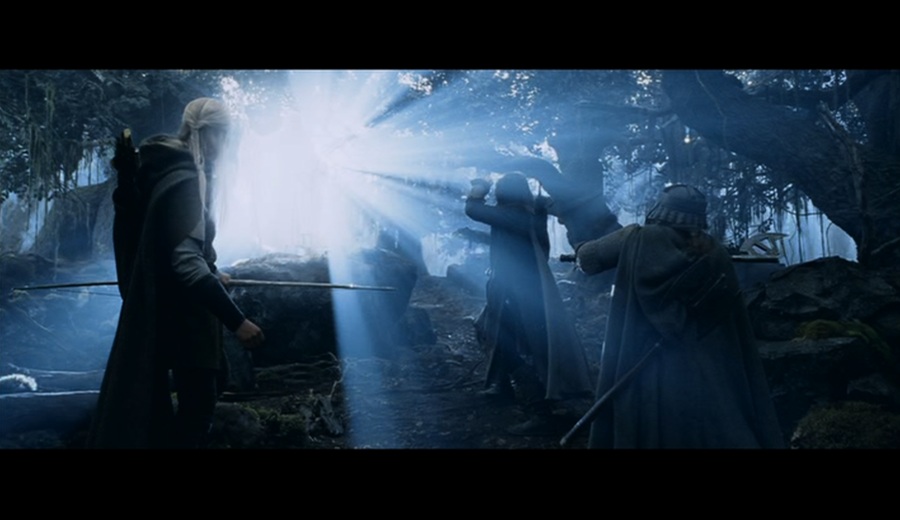
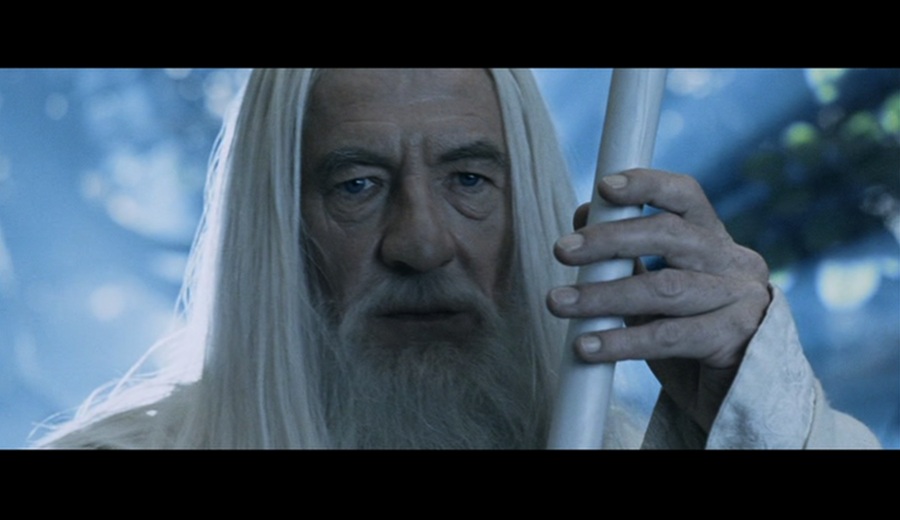
One of the most poignant moments in ‘The Fellowship of the Ring’ was Gandalf’s apparent demise, as he was dragged into the abyss of Moria by the Balrog. ‘The Two Towers’ opens with a revelation: Gandalf’s fall was not the end. When Aragorn, Legolas, and Gimli enter Fangorn Forest, the wizard makes a dramatic return, transformed and more powerful than before.
Aragorn asks what became of him, and Gandalf replies:
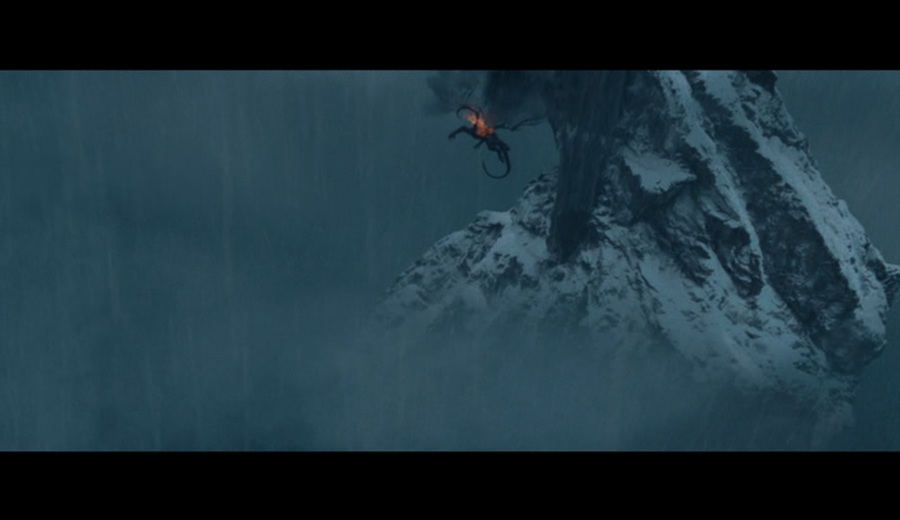
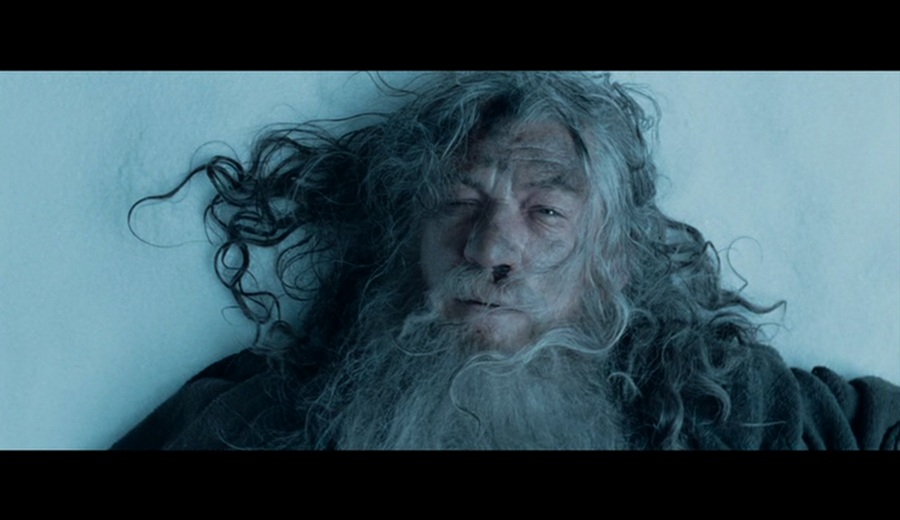
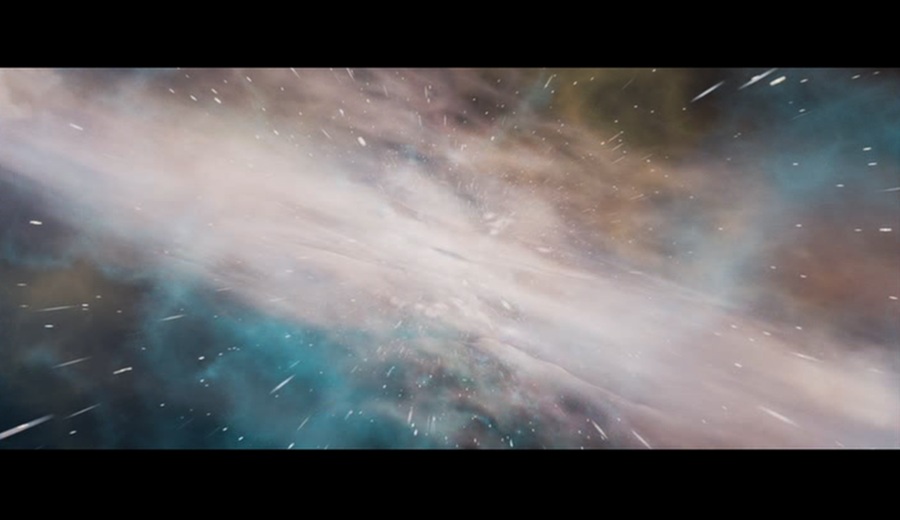
“I fell through fire and water. From the lowest dungeon to the highest peak I fought with the Balrog of Morgoth. Until at last I threw down my enemy and smote his ruin upon the mountainside. Darkness took me and I strayed out of thought and time. Stars wheeled overhead and every day was as long as a life age of the Earth. But it was not the end. I felt life in me again. I’ve been sent back until my task is done.”

The Biocentric Theme
Obviously, Gandalf has died and returned or sent back as he puts it. In his story Gandalf directly states that there is more to the universe than this realm of space and time.
Gandalf’s words suggest he experienced death and return or, as he puts it, was “sent back.” His account hints at a reality beyond our physical world, where time and space as we know them do not apply. He describes straying “out of thought and time”, implying that time is a construct of this earthly realm, not a fundamental aspect of existence. Where he went, time lost its conventional meaning, if it existed at all.
His return also implies the presence of a conscious intelligence guiding events on Earth. While this idea aligns more with paganism – where spiritual forces shape mortal affairs – it shares common ground with biocentrism. Both perspectives reject the notion that we are merely physical beings on a material planet. Instead, they propose that we are part of a grand, interconnected consciousness.
Gandalf’s transformation from Gandalf the Grey to Gandalf the White further reinforces this theme. His body is revealed as a vessel, an avatar enabling his cosmic purpose within this spacetime. This mirrors the core tenet of biocentrism: that space and time are constructs of the observer, and that reality is fundamentally mental, not purely physical.
In essence, this scene beautifully aligns with biocentric thought. It suggests that our existence is part of a vast, conscious system – one that transcends the physical world.
 Free-Consciousness
Leave a comment