
Popular culture plays a powerful role in shaping public understanding and influencing cultural narratives. Through storytelling, cinema can offer glimpses into complex philosophical ideas in ways that engage both intellect and imagination.
In this section, we’ll therefore explore films that draw on biocentric ideas, using storytelling as a way to spark new perspectives on biocentrism and the theory of the mental universe – the notion that life and consciousness are the true foundation of the universe.
In this first entry in the series, we’ll discuss the movie ‘Source Code’ (2011, Duncan Jones), a film that weaves quantum concepts, consciousness, and identity into a fast-paced sci-fi thriller. (Spoilers ahead.)
The Movie
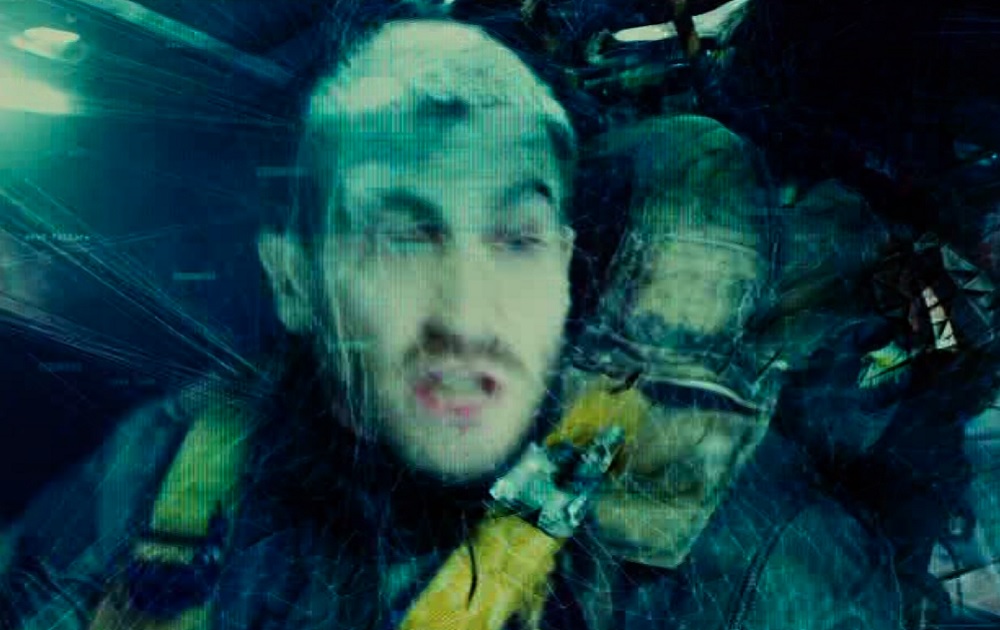
There is a scene early in ‘Source Code’ in which the protagonist Colter Stevens (Jake Gyllenhaal) looks in his reflection in the mirror only to see another man’s reflection.
This moment captures the film’s central biocentric theme: our identities as physical beings are illusions. What we truly are, the movie suggests, are conscious observers – mental avatars temporarily inhabiting a material world that only seems solid.
This idea is reinforced through dialogue such as:
“I think you broke his jaw.”
“That’s okay. He’s not any more real than you are.”
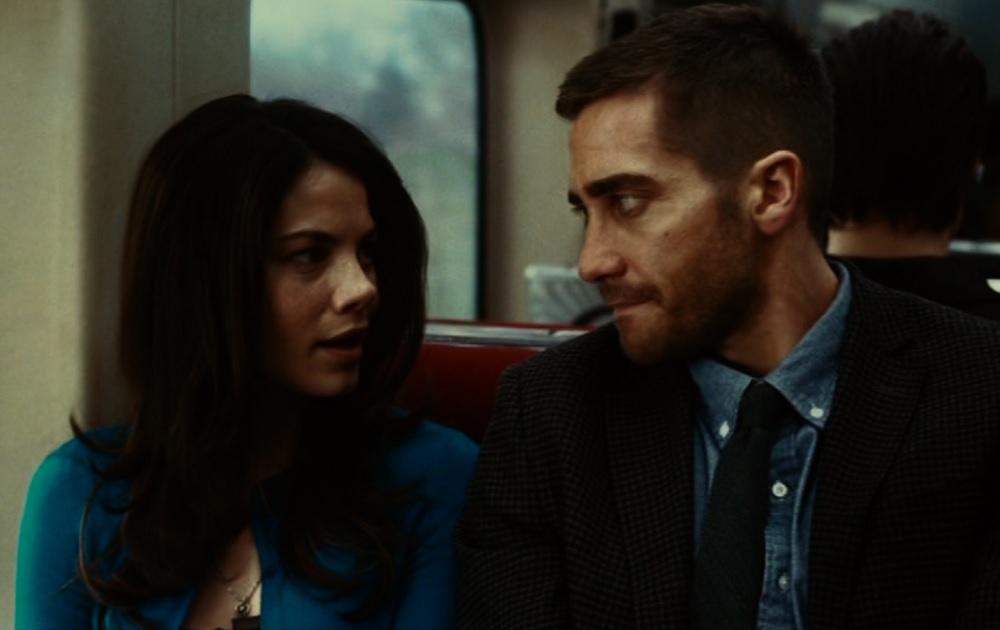
It turns out that Colter is ‘logging in’ as it were in the last 8 minutes of the life of a man named Sean Fentress. Fentress was on board a train with his girlfriend Christina Warren (Michelle Monaghan) when it blew up outside of Chicago and killed all of the passengers.
It turns out that the military has developed a technology called ‘Source Code’ that can be used to log onto a passenger’s consciousness if only for a short time. His military operator urges him to discover who blew up the train because they suspect another attack is imminent. After every 8 minute session, he reports his findings before he is sent back in.

The Biocentric Themes
Dr. Rutledge, the scientist behind Source Code, explains that a brain – like a lightbulb – emits an ‘afterglow’ when it dies. The residual electromagnetic activity lasts for a brief period, allowing the program to access a short eight-minute memory window. By linking two consciousness streams, they can project one person’s awareness into another’s past experience. Stevens finds out he has died at this point, but he is kept alive so he can complete this final mission.
Now, this materialistic explanation doesn’t really make a lot of sense. Not in the least place because Sean Fentress’ body was surely destroyed in the explosion. Also, what use is a technology that allows you to have a dying soldier experience the last 8 minutes of somebody’s life? What practical applications are there for this Source Code? Yet the film’s deeper resonance lies not in its science, but in its metaphysics.
In the world of Source Code, Colter discovers he is not a physical being at all – only consciousness, pure experience. Space and time dissolve; he and Sean have no fixed location. They exist wherever their awareness is present.
Once Colter accepts this, he begins to ‘play the game’, exploring each session to uncover new details. This mirrors the biocentric view of existence: life as a consciousness-based reality, where we are both creators and participants in the unfolding story of our experiences.


The New Frontier Of Consciousness Science
‘Source Code’ also gives us a glimpse into what future technologies might make possible. Robert Lanza has said that once we understand the mental algorithms that shape our reality, we can manipulate them and indeed log into other experiences across time and space.
Want to experience the Old West? No problem. We can hook you up to a machine and let you have a real virtual experience. We could learn everything about lost civilisations and potentially the entirety of the universe all through a deep interface with consciousness itself.
The Multiverse And The Power of Choice
Finally, the movie explores the possibilities of a multiverse. And interestingly, this vision is close to what Lanza is proposing in his ‘Biocentrism’ books, especially ‘The Grand Biocentric Design’. The past and future are not fixed things, but exist as a whirl of possibilities. It is conscious observers that collapse the possibilities into experienced realities.
In theory, it is therefore possible to alter reality if you could have your mind go back to a point in your ‘past’ in which you make different choices. Choices determine reality and the possibilities of realities you can experience are endless. It is these possibilities that are the real ‘Many Worlds’ of the famous quantum physics theory.
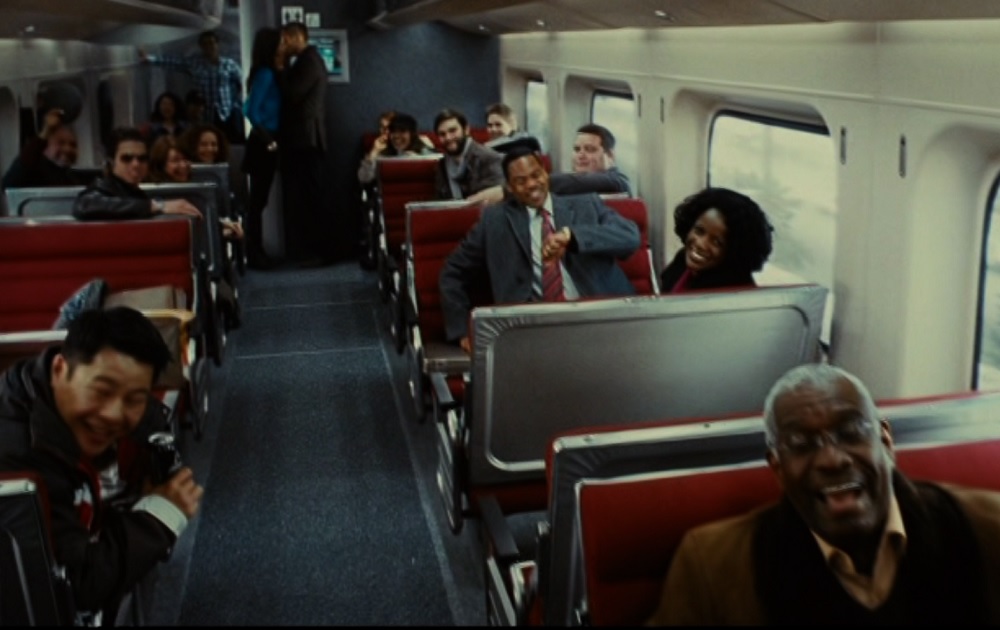
And the end of ‘Source Code’ shows us exactly that. Colter’s choices create a new timeline, rewriting the fates of everyone involved – including his own.

 Free-Consciousness
Leave a comment